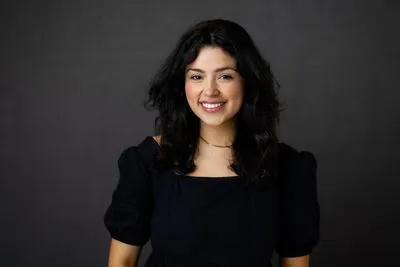
Why Natural Beats Posed Every Time
Look at the headshots on any corporate website built before 2015, and you will see the same thing: stiff postures, forced smiles, and eyes that seem to be looking past you rather than at you. These headshots were technically competent -- properly lit, sharp, well-composed -- but they all shared the same fundamental flaw. They looked like headshots instead of looking like people.
The modern standard has shifted dramatically. Today's best headshots look like someone caught you in a genuine moment -- mid-laugh, deep in thought, or simply at ease. They convey personality, warmth, and authenticity. And the data shows this matters. Research from PhotoFeeler, a platform where users rate profile photos, consistently shows that natural expressions score higher in perceived competence, likability, and influence than posed ones.
People are remarkably good at detecting fake expressions. We evolved to read faces for survival, and even though we may not be able to articulate exactly what looks "off" about a forced smile, we feel it. A headshot with a genuine expression creates connection. A headshot with a performed expression creates distance.
How We Create Natural Moments
Natural-looking headshots do not happen by accident. Paradoxically, they require more skill from the photographer, not less. Here is how we approach it.
Conversation Over Direction
We do not start a session by saying "turn your head 15 degrees to the left and tilt your chin down." We start by talking. We ask about your work, your weekend, your dog's name, what you had for breakfast. The conversation is not filler; it is the process.
When you are engaged in a real conversation, your face does what it naturally does. Your eyes become animated. Your smile becomes genuine. Your jaw unclenches. The tension between your eyebrows releases. These micro-shifts are nearly impossible to direct verbally, but they happen automatically when you stop thinking about being photographed and start thinking about something real.
We are shooting throughout this conversation. Some of the best headshots we have ever taken happened while the person was answering a question they found genuinely interesting.
Movement Techniques
Static poses breed tension. The longer you hold still, the more rigid you become. That is why we keep you moving. Not dramatic movement -- subtle shifts. Walking toward the camera, adjusting your weight from one foot to another, turning your head to look at something, then looking back. Each movement creates a brief moment of natural alignment that we capture.
One technique we use frequently is the "reset." We will have you look away from the camera entirely -- out a window, at the floor, at the ceiling -- and then look back. That moment when your eyes reconnect with the lens has a natural quality that cannot be manufactured by staring at the camera continuously.
The Warm-Up Period
The first five minutes of any session produce the weakest images, and that is by design. We use that time to let you acclimate to the camera, the lighting, and the process. By the time we are ten minutes in, you have forgotten you are being photographed. That is when the real session begins.
We never rush this warm-up. If you need twenty minutes to relax, you get twenty minutes. The clock is less important than the quality of what we capture, and relaxed subjects produce dramatically better results than stressed ones.
Real Examples of What Works
The headshots that get the most positive feedback from our clients tend to share certain qualities:
Eyes that are engaged. Not just open and pointing at the camera, but actually engaged -- as if you are looking at someone you are happy to see. This engagement comes from the conversation technique described above. When you are genuinely listening or thinking about something interesting, your eyes show it.
Mouth that is relaxed. This does not necessarily mean smiling. Some of the best headshots feature a confident, closed-mouth expression with just the hint of a smile at the corners. Others feature a full, genuine laugh. What they have in common is that the mouth looks natural, not held in position.
Shoulders that are dropped. Tension lives in the shoulders, and elevated shoulders are the single most common sign of an uncomfortable subject. When your shoulders are relaxed and slightly angled, the entire image looks more natural and confident.
A tilt that feels organic. A slight head tilt can convey approachability and interest. But the tilt needs to happen naturally, as part of a conversation or movement, rather than being directed. Directed tilts almost always look exactly that -- directed.
The Authenticity Test
We apply a simple test to every headshot before delivering it: does this look like the person, or does it look like the person trying to look like someone? The best headshot is one where you look at it and think "that is me on a really good day." Not a different person. Not an idealized version. Just you, at your best, captured with intention.
This is why we spend time getting to know you at the start of every session. We need to understand what "you at your best" actually looks like so we can recognize it when we see it through the viewfinder. A photographer who does not talk to you cannot know what your genuine smile looks like, and without that knowledge, they are guessing.
Why This Approach Takes Skill
Directing someone into a specific pose is straightforward. You can follow a formula. Creating the conditions for genuine expression is a different discipline entirely. It requires reading people, adjusting your approach in real time, knowing when to talk and when to be quiet, when to crack a joke and when to ask a thoughtful question.
It also requires technical adaptability. When a great moment happens, it does not wait for you to adjust your lights. You need to be ready to capture it instantly, which means your technical setup must be dialed in before the human work begins. We light for natural movement, not for a single fixed position, so that wherever you are in the frame, the light looks good.
The result is a headshot that feels like you -- not a performance of you. And that is the image that will serve you best, whether it lives on LinkedIn, your company website, or a conference speaker page. Because the person who shows up to the meeting should look like the person in the photo.